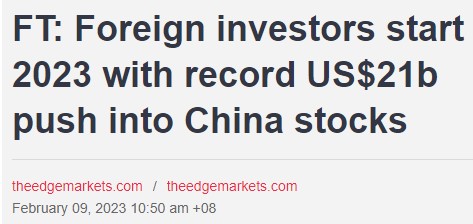
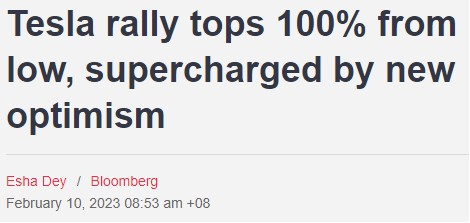
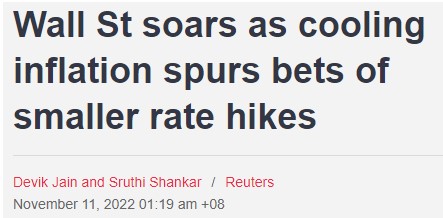
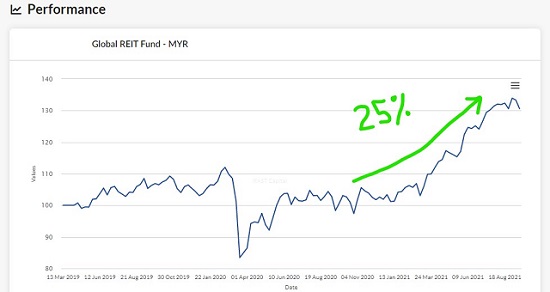
We are now one step closer in the 1-2-3 sequence of events (as explained in my Jan 23 update). The markets also reacted to it
The next meetings happens on 22 March and then 3 May. It is expected the Fed stops hiking rate after its 22 Mar meeting
If you opined Fed to stop earlier, then you can say the rate hike has ended in 2 Feb.
If you opined Fed going to stop later in this economy cycle, then you can say May 3.
In other words, one of those 3 dates will be the start of ‘The Pause’.
From there, we are one step closer to interest rate cuts and the start of the market recovery
But how long will ‘The Pause’ last for?
So here’s what we know. Jerome Powell said on 14 December that ‘The Pause’ is going to last for all of 2023. Rate cut not going to happen and that the US. can endure all this economic pain caused by elevated interest rate.
So do you believe him? Personally, I do not. Powell said in 2021 that inflation will be transitory. He messed that one up real bad.
I could be skeptical, but the questions isn’t too much of ‘When’ but ‘What’
Federal Reserve will start cutting interest rates when something gives.
You know what’s going to give? It’s going to be the debt markets.
There will be a liquidity crisis because they cannot do aggressive quantitative tightening and rapid interest rate increases without something breaking.
The credit market is bigger and more important than the stock market or the crypt0 market
When debt dries up, liquidity goes out the window,
And it will drag down stocks and crypt0s with it.
History shows that it normally takes 24 months to get back to normalized inflation.
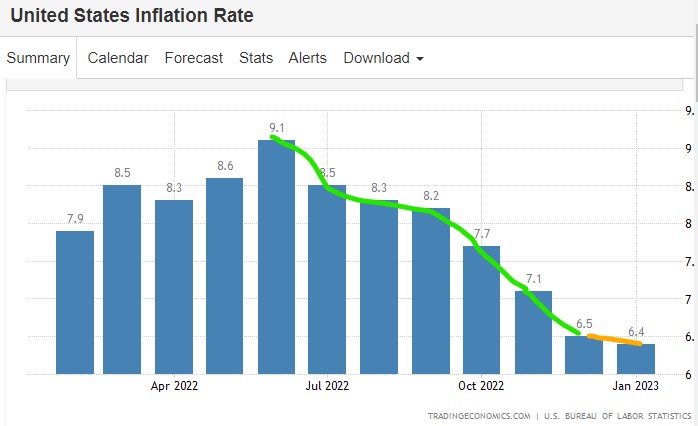
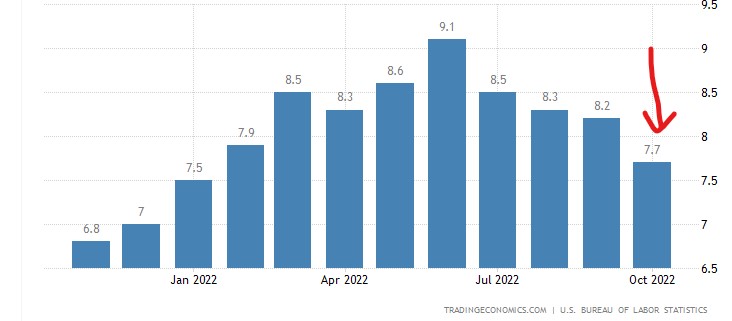
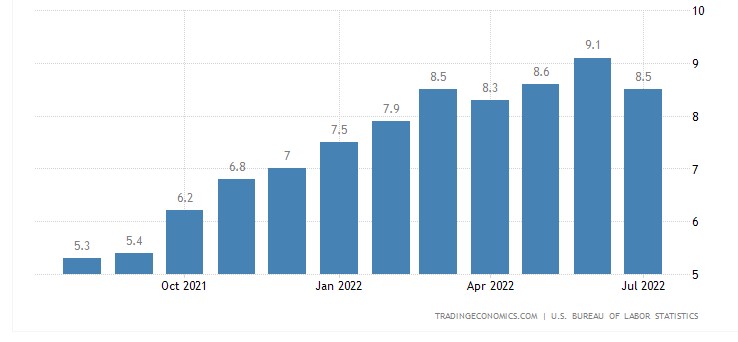
Recall the rate of inflation peaked in June of 2022 at 9.1%
24 months from peak inflation. That would put us in the middle of 2024 to get back to normal.
However, the Federal Reserve did not say that they would cut interest rates when inflation gets down to 2%.
They said that they would begin cutting interest rates when they see that inflation is on the trajectory towards 2%.
Therefore, that means that they could start cutting interest rates when inflation falls down to the upper 3% range, and that’s possible in late 2023 or early 2024
So the pieces of the puzzle all fit, and they point to interest rate cuts in the later parts of 2023.
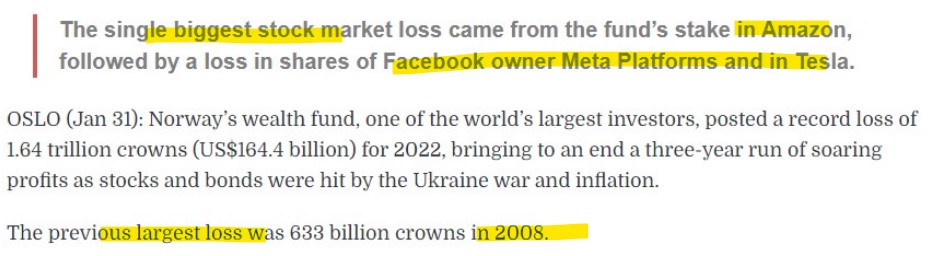
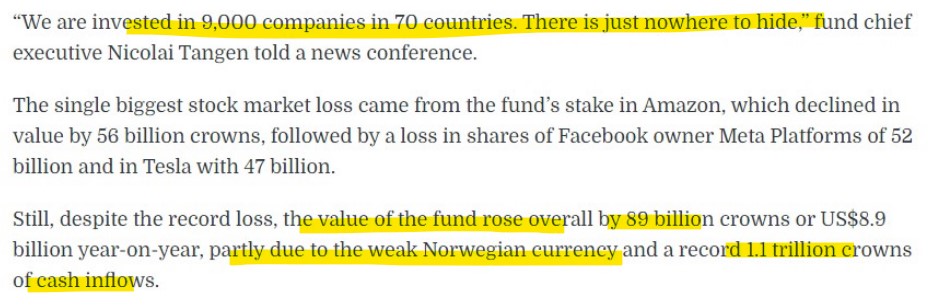
When that happens, investment portfolio, big or small (or as big as Norway sovereign fund) will make up for the price drop due to a turbulent 2022
2 things that will ‘spoil’ the predicted sequence of events explained above:
1. A persistently lower than expected unemployment rate (=Strong job markets) will throw a spanner into the works.
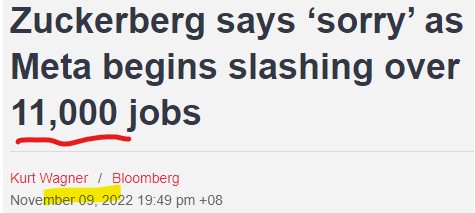
The widespread layoffs you read recently in the news, though, could spike unemployment rate in the coming months. (if this happens, Effect = Positive ✔️ to stock markets)
2. Inflation that’s not coming down as fast as expected, which is evident from the most recent data (see below).
Risks of elevated inflation being entrenched in the economy, which can trigger longer or higher interest rate hike or both (if this happens, Effect = Negative ❌ to stock markets)
Analogy: My weight used to peak at 78 kg at one time, that’s when I decided to reduce carbs & do intermittent fasting. In 1 month, I dropped from 78kg to 70 kg.
Then it took me another 6 months to get it down to 65 kg.
But thereafter, the time and effort needed to reduce from 65kg to 60 kg is so much higher (1 year + with 40 min daily, 6 times a week of exercise, on top of keeping carbs consumption low & I.F. )
Prediction: rate hike will slow down, expected 0.25% on 1 Feb 2023, then another 0.25% on 22 Mar 2023. This is Step #1 Fed Pivot.
Step #2 Fed Pivot – pause interest rate hike but keep it elevated (est 5%) for ‘some time’
‘Some time’ explained: We don’t know how long the Fed is going to keep interest rates at those restrictive levels. They are not offering clues on this.
3 months, 6 months? 9 months? Honestly, they’re being vague because I don’t think they have any clue either. So they’re just saying that they’re going to be data dependent, which means that they’re going to be reactionary
For the record – High interest rate is really not the best way to resolve inflation caused by geopolitical events & supply chain constraints.
But this is the ONLY Way central banks have – they have no choice, even at the cost of causing economic pain – to retain credibility and ensure future monetary policy effectiveness.
You have to understand this. When step #1 of the Fed pivot begins, that is not ‘powerful’ enough trigger a massive stock or bond market rally Why? I’ll give you a few of my thoughts. Watch this video to the end
Apart from hiking interest rate, another way to bring down inflation, is to decrease money supply in the economy by adjusting bank Reserve Requirements (RR) in a season of Tightening Monetary Policy
Banks’ Reserve Requirements Explained:
Reserve requirements (RR) are Central Bank regulations that set the minimum amount that a Commercial Bank must hold in liquid assets & cannot lend out. This is to ensure that Commercial Banks are able to meet their liabilities in case of sudden withdrawals.
Higher reserve requirement set by central bank = less money commercial banks can loan out = commercial banks earn less profits
That means setting Higher RR is also a method to control inflation –
but central bank decides to harm the economy by making things expensive for everyone via Hiking Interest Rate
…. instead of the harming commercial banks’ profits by Upping RR
In the case of US, its Central bank, the Fed also wants to see more people fired from their jobs.
No seriously, it’s complicated but the Fed does want to see job markets suffer and more jobs disappear (higher unemployment rate) before they start to revive the economy and lower interest rates again.
In reality, the Fed or any central bank is relatively powerless in actually affecting the job market, instead depending on the
trickle-down effect of interest rate hikes – …leading to slumping corporate profits …due to the higher borrowing costs, …which also dampen consumer demand.
What commercial banks do with extra money (Excess Reserves) and how does it relate to the Government & Central Bank agenda?
US Fed inflation attack plan for 2022-2023 – take back the printed money in 2020-2021 by raising interest rates, gently crashing the economy, together with the stock market, bond market, real estate market.
As the economy crashes, people are expected to buy less goods/services because people are going to be more broke than before.
When there’s less demands for goods/services, then prices are going to stop going up so fast regardless of supply chain issues.
Real estate market is a good example. When mortgage rates go up, then less people can afford to buy a home. If less people can afford to buy a home, this means that there’s going to be less demands for homes. Home prices will fall.
Also, when interest rates go up, less businesses are going to take out loans to expand because it’s going to be more expensive to borrow money. When there’s less expansion, there’s less growth, which lead to less hiring. People may even get laid off – it’s already happening
Less job openings vs people who are out of job but looking for a job, means less wage inflation.
With business landscape slowdown, businesses are going to be purchasing less equipment, less office space, less supplies, etc. Problem solved.
While it’s not the most elegant or effective way to bring down inflation, but hey, if they’re going to damage the economy badly enough, then, yeah, it’s going to get the job done.
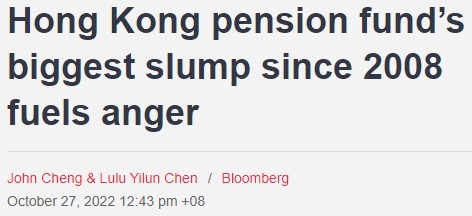
Stock market becomes collateral damage. You’re going to see some people’s retirement accounts get destroyed, it’s already happening in Hong Kong.
so they’re going to have to come out of retirement just to make ends meets. Some people will say that they’re going to have to work for a few more years in order to retire. In order words, ruining the retirement lives and plans of people.
Move Fast & Break Things
So the Federal Reserve, they have to move fast with Quantitative Tightening & Interest Rate Hike.
They cannot make this a gradual process. There will not be a ‘soft landing’.
Normally they raise interest rates by 0.25% at each one of their FOMC meetings.
But these are NOT normal times. With inflation so high, they’re freaking out and they’re raising interest rates by 0.75% at each one of their meetings.
Basically, they underreacted a year ago and they’re overreacting now. Not because they want to, but because they have to, coz inflation is too high
This ‘over-reaction’ will continue to the point of maximum financial pain that the economy & financial markets can tolerate. Even the government itself also feel the same pain when they need to pay higher interest expense on its debt,
…which ironically is imposed by its own central bank.
Recall what happened in the UK and what the bank of England did?
Tax cuts = less gov revenue, which is like adding salt to the wound.
They did what they did because they couldn’t withstand any more pain. They caved first and that was expected.
Any government cannot survive in a deflationary environment.
That’s because gov cannot tax deflation and they need inflation to help pay for their old debts.
Therefore, the Federal Reserve will pivot because the Federal government needs it.
When that happens, we’re going to get more persistent inflation and everything will inflates, including the stock markets.
Just to be clear, this is not a good solution.
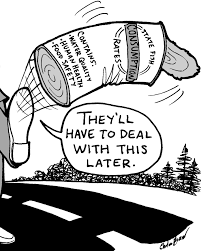
This will be kicking the can down the road. It’s like stopping your antibiotics prescription halfway because your body can’t take it anymore, at the expense of your bacterial infection coming back again in 2 weeks.
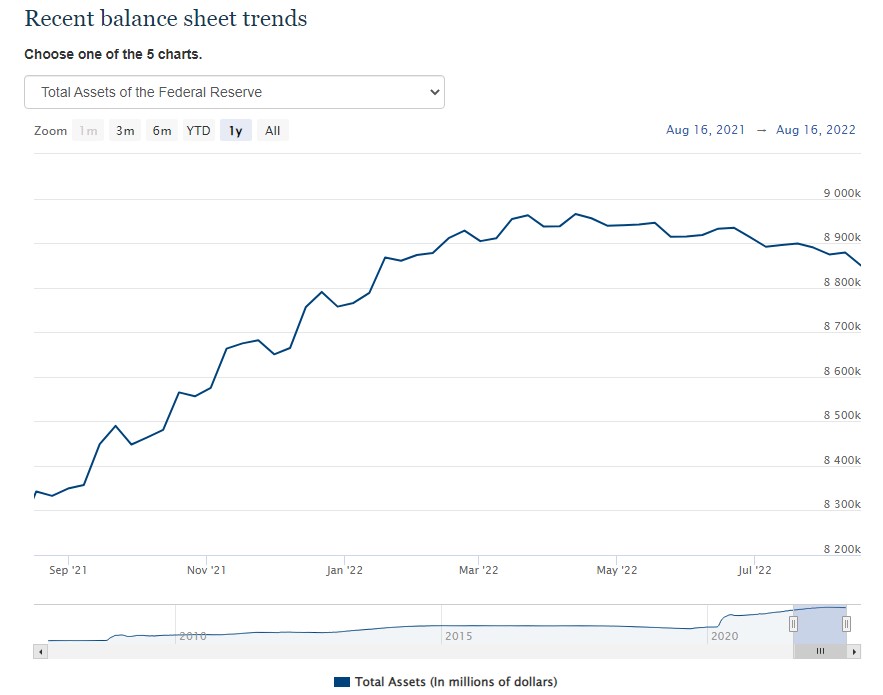
The Fed Pivot – slow/Pause Rate Hike, then back to printing more money
*Fed Pivot has Phase 1,2 & 3, Only talk about Phase 1 this time
So the big question is how far & how long is the Federal Reserve going to take this? When is the Federal Reserve going to cave in, stop and pivot?
In order for the Fed to pivots, inflation needs to be decreasing and on its path to 2%.
Please note, and this is so important, this does NOT mean that the Fed will pivot when inflation is close to 2%.
This means that the Fed is going to pivot when they believe that they’re on the Downward Trajectory to reaching 2%. So this could be when inflation is at 4% or even 5%.
This just in, 11 Nov 2022. Latest figure at 7.7%. Notice 9.1% peak in June ’22.
The Fed can also pivot if when there’s a clear & present danger of liquidity crisis. So just think of this as a meltdown in the financial markets, especially the bond market.
If there’s a liquidity crisis, all the financial markets are going to go from bad to worse in a hurry, and we’re talking about disaster levels.(think UK in Oct ’22)
So far it hasn’t happened yet. But if it does, then the Fed will have to pivot fast.
When that occur, financial markets rebound – stocks, bonds, real estate.
So this would actually be good for Opportunistic people with money ready to when the Pivot occurs.
However, there’s going to be a trade off.
More inflation & widening wealth gap.
This is where the rich get richer (even though their wealth got hammered for now), the poorer get poorer, and the middle class shrinks even more.
Put yourself into government’s shoes
You have 2 options. The 1st option is have a Great Depression, civil unrest, chaos.
The 2nd option is to Pivot, followed by turning the money printers back on. Which one are you going to go with?
The government and the Federal Reserve, they’re going to choose #2 – a more appealing option because if they don’t do that, then immediate chaos and destruction is guaranteed.
That’s why the UK went with #2. They switched the money printers back on, albeit for 2 weeks previously. They understand the risk of hyperinflation.
However, by going that route (#1), the civil unrest and the chaos, it gets delayed, it buys time and there’s a chance that production can pick up to offset the demand-driven inflation.
That’s why you see most country debt levels keep going up past decades, because it’s essentially – ‘kicking the can down the road’….
if you are a country leader, there’s no way civil unrest happen during your term in office. You are just going to pass that risk to the next leader coming to office.
Skip this part if you didn’t invest in crypt0
The crypt0 market will be directionless until US market (S&P500) convincingly bounces back up. The S&P500 will not find a bottom untill the Fed stops hiking rate. The Fed will not stop hiking rates till something breaks in the economy Signs of break: inflation decelerating, unemployment up, liquidity crisis etc
There’s absolutely no reason to even be think about crypt0 until S&P500 is showing signs of stabilizing.
Sentiment also very much affected by the collapse of FTX – one of the largest crypt0 exchange.
Reason: Liquidity Crisis, leading to instant bankruptcy
Simplified explanation: Imagine if you invested into Bursa M’sia stocks, now you & million others want to sell & withdraw but the exchange (Bursa M’sia) says it is unable to process your withdrawals because it turns out they don’t have enough money. Ridiculous, right?
Of course this NEVER happen in stock or bond markets so far – they are regulated.
But crypt0 exchanges are not. Not oversight, no check & balance.
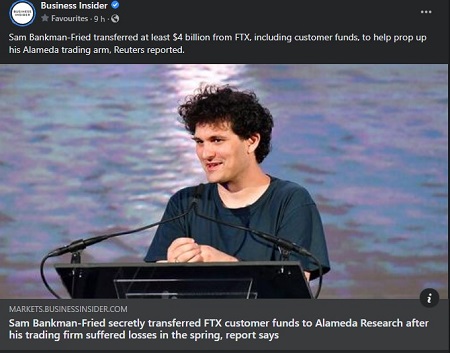
FTX billionaire was found to do hanky-panky with customers’ & investors’ money, losing all of them…
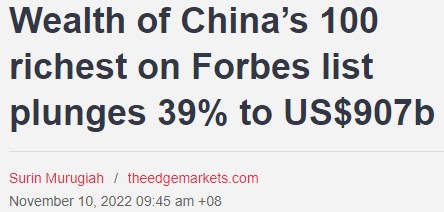
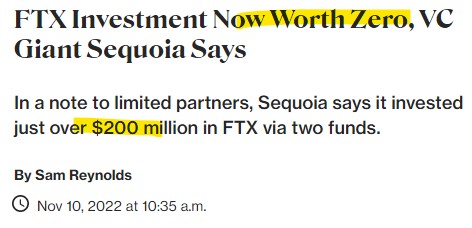
…while private equity investors, the likes of Temasek SG, Softbank & Blackrock are now considering to follow Sequoia step (see below)
…writing off their investment to Zero, aka, Total Loss.
Rgds
CF Lieu
p.s. – Rates of inflation slowing down does NOT mean inflation is going reversing. Price is still going up, they are just not going up as fast.
Also –
Rising Interest rate hike won’t be felt by the economy instantly due to Lag Effect
Explained, simplified: Imagine market rental rate has gone up 20%, you as, a tenant, will not feel it immediately because your rental is locked in your tenancy agreement. But! When you renew your lease, that’s when you feel the pain.
Versus: Floating-rate Mortgage payments – there is No Lag Effect
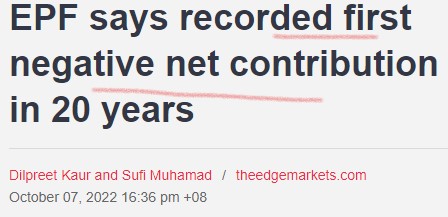
EPF annual report press release usually coincides with annual Budget week, not sure if you notice.
EPF statements in last week press release is a good perspective to help you understand the impact from global events to your investment for the past 1 year
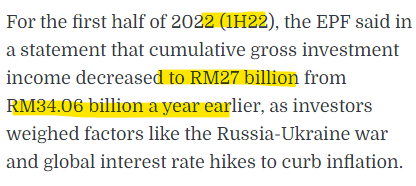
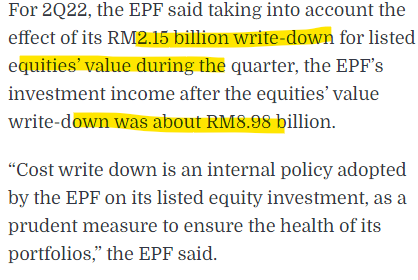
snapshot 1
explained: return of investment has decreased 21% btwn Jan-Jun 2022 compared to Jan-Jun 2021, even with a balanced portfolio of equal stocks and bond allocation (as of Dec 2021 going into 2022).
…disclosing that even EPF is not immune from major market drops. It is likely the equities portion dropped more than 20% though, since EPF’s fixed income is very M’sia focused, hence unlikely to fall 20% in value.
Remember when it comes to public funds like EPF or ASB, just because the platform does not show you the day-to-day price fluctuation, it does not mean there is no fluctuation
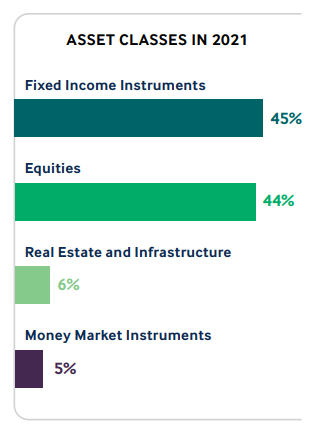
snapshot 2
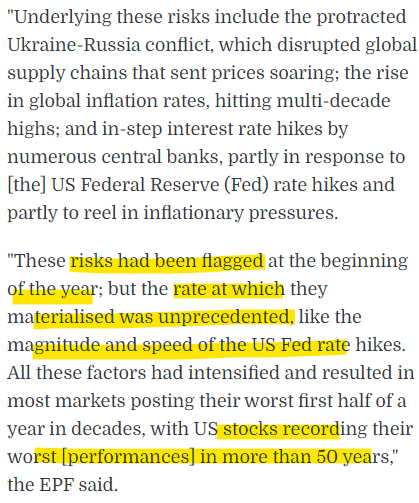
explained: by end 2021, US central bank’s chairman said inflation is temporary, economy is recovering, so the rational thing is to keep/stay invested in equities.
By mid Q1 2022, the Fed took a massive U-turn and kickstarted rate hike, sending shocks into global financial markets never seen before since 50 years ago.
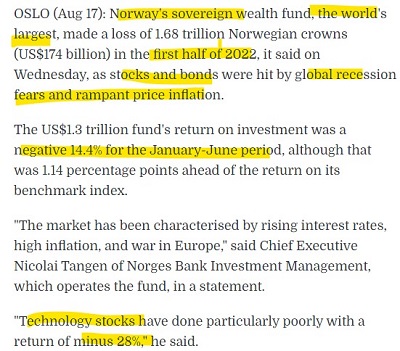
EPF is experiencing what Norway sovereign wealth fund is also experiencing
snapshot 3
explained: EPF cut loss on some of its invested stocks because they have ‘turned bad’. Did not specify what stocks but I give you an example: Serba Dinamik for its notorious false information in its annual report.
However, EPF did not do a blanket ‘cut loss’ for its entire bond/stocks portfolio which has decreased in value for the time being as they are fully aware of contagion effect caused by global events, not because ‘all the apples have turned bad overnight’.
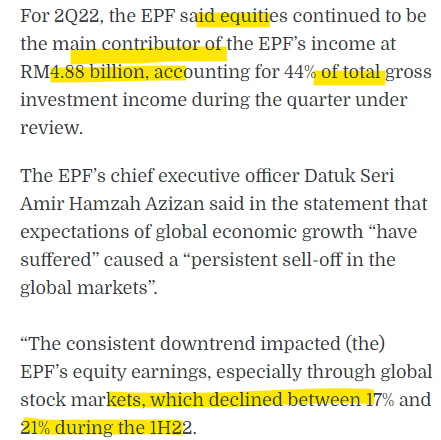
snapshot 4
explained: Stocks have been, and will always be, the ‘return upside factor’ in any investment portfolio.
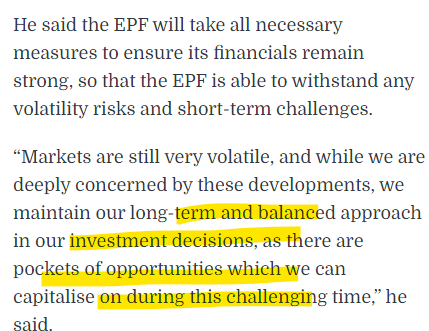
snapshot 5
explained: EPF is on ‘wait and see mode’ but not doing nothing; instead it is buying more whenever it can.
But EPF isn’t using its 5% of liquidity (money market) to ‘buy more’ because that 5% is used to cater for members’ withdrawal.
Try guessing how EPF ‘capitalize on pockets of opportunities’ ? (see below)
Rgds
CF Lieu
ps: this is not a coincidence, EPF knows what it is doing)
This is what EPF admitted:
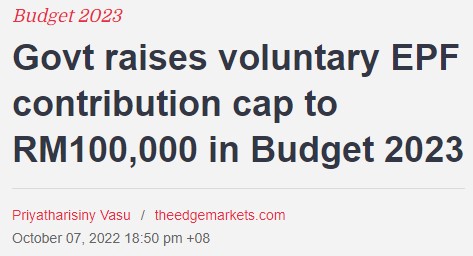
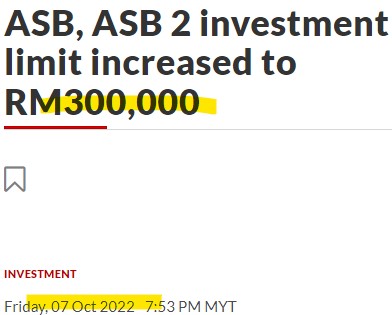
And then, this is what Zafrul announced, from 60k cap to….
I’ve compiled FAQs on your investment portfolio in view of what’s happening. See below.
Q1. Was it a bad decision/timing to invest/stay invested in 2021?
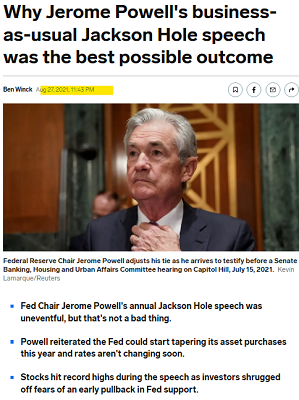
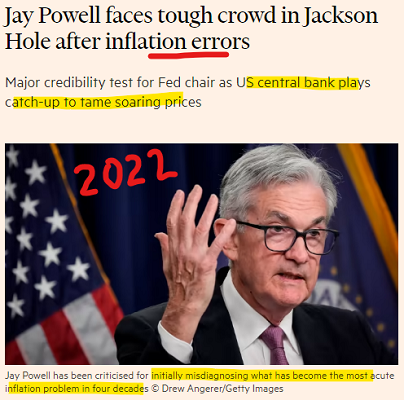
Last year, Aug 2021 at Jackson Hole, US (where major central bankers meet), Fed chairman, Powell, assured the world ‘inflation’ is temporary, and it’s business as usual (= no red flags incoming, no drastic actions being planned).
So, the world, including us, took his assurance seriously and continue to (stay) invest in equity markets.
After all, economies were reopening, lockdowns eased and don’t forget, to his credit, Powell was still the hero who saved US economy (and the world) from plunging into recession due to Kovid19. Plus, interest rates was all-time low then.
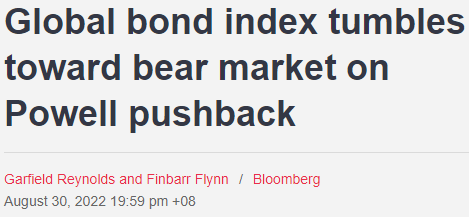
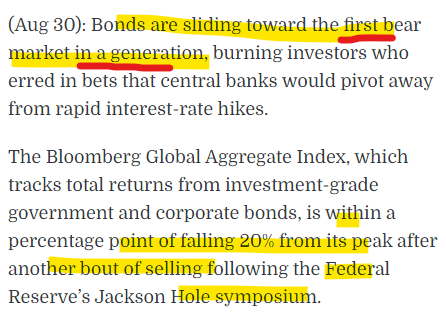
Fast forward to end Aug 2022, let me show you this self-explanatory headline
Btw, US market has dropped for 7 days continuously after Powell speech and continues to do so.
———-
Q2: What is the rationale of reducing equity (stocks) exposure before Nov 2022? (2 months away)
8 Nov 2022 = US Midterm election.
= Higher political risk that does NOT exist in 2021.
Also remember Ukraine-Russia crisis has not happened in 2021.
Biden administration is trying hard to hold things together until 8 Nov 2021 –
-namely, the economy (inflation), the housing market, the stock market, supply of USD in the system…
After that, they may care less, whether Democrats win or lose.
For context – Democrats control the House of Rep, the Senate & the Presidency – since they are running the show for the past 2 years, so when inflation is high, Americans naturally blame the Democrats.
One glaring sign of Biden administration trying its best to curry favor from the swing votes (=voters who are on the fence, neither a die-die supporter of Democrat or Republican) is this:
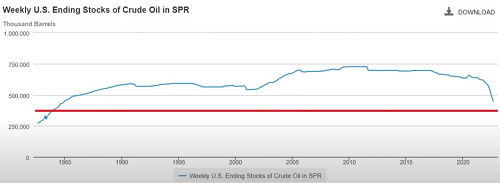
Artificially lower oil price in short term by releasing inventory from US Strategic Petroleum reserve...
…which, by right, the reserve should only be used to deal with oil shortage in case there’s a natural disaster or World War 3.
(blue line = oil inventory, red line = critical level oil inventory)
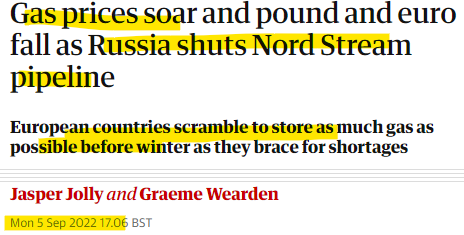
As a result of this ‘abusive’ usage, oil prices has fallen vs 1 year ago but bounces up occasionally when Russia enters the scene, dragging EU into the mud.
After 8 Nov, US will need to replenish its oil reserves,
aka – buy oil,
demand for oil up = drive up price as well.
Also, US Fed knows too well that what they do will also reflect on Biden administration,
…that is why they are now fixing the mess they’ve created in 2021, but effort-wise, data shows Fed still is half-arsing things as mentioned previously.
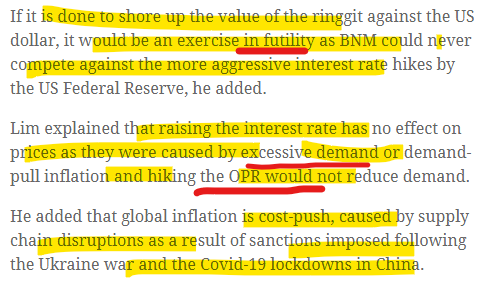
Inflation may just become ‘immune’ to interest rate hike.
And I’m not the one with this view (see this)
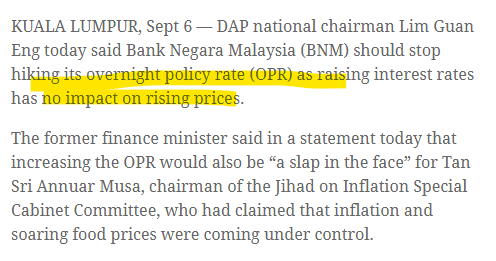
But BNM continued to hike another 0.25% in Sept 22
Back to US Fed’s effort to control inflation: that is likely to change a lot after 8 Nov as Fed switches tactic to Open Market Operation to push down inflation without worrying about swing votes anymore
China has its own defaulting property sector to deal with, on top of this
So with this everything happening together, you now know why you see more ‘red’ than ‘green’ in your investment
Q3: Is my portfolio exposed to higher volatility/risks than what it should have been?
In terms of equities (stocks), it is as diversified as it could be – in different sectors, regions and fund managers.
Yet, still, you see similar patterns – they are all down, albeit at varying magnitudes.
That already gives you indicator that this isn’t a ‘bet onto just 1 number in a Roulette game’ strategy.
From the start, there is little, if any, concentration risk.
Just like Kovid19, you are aware it’s a Macro event affecting everything & everywhere, even digital currency (although not considered as ‘asset class’ per se).
Of course, for lower risk profile portfolios, there’s always bonds asset class (both local & foreign) to cushion the intrinsic volatile nature of equities.
However, bonds everywhere are also undergoing dip in prices (albeit at lesser magnitude) – deemed as ‘the first bear market’ in a generation
Q4: Would the ‘reds’ (unrealized loss) I am seeing now recover? Any timeline?
Objectively, we don’t know in terms of ‘months’.
Subjectively, as long as it takes for US Fed think they need to do their QT (Quantitative Tightening aka ‘suck money out of the economy’),
…that will be how long it would take before the broad market rebound.
Q5: What will make the global markets recover in short term?
Yes, by evaluating a ‘every cloud has a silver lining’ situation daily – in the form of quarterly corporate earning seasons announcements, soonest one coming in mid Oct.
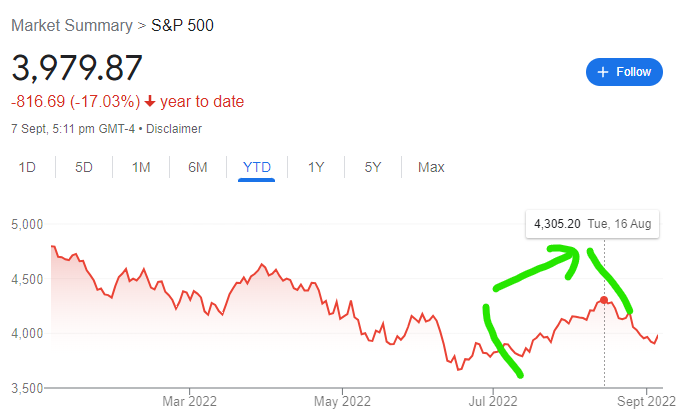
Generally speaking, if most companies earnings are still resilient/shows positive growth, historically the broader market will rebound. This happened in June/July. see:
Q6: What will make the global markets recover in long term?
Microsoft, Google, Amazon etc (stock prices dropped double digits) aren’t going bankrupt although they are taking actions to reduce/freeze headcount (one of the most instant cost-cutting measures), so to be more financially prudent to weather thru next 1-2 years.
When that happens, company earnings (profit) that meets or exceeds investors’ expectations would translate to gradual stocks prices recovery (see Q5 answer)
Aside from black swan events (Ukraine-Russia war, supply chain disruption), US central bank (Fed) actions pose the Biggest impact to your ongoing investment portfolio. Also, US midterm election coming soon in Nov ’22.
Fact: Ongoing Interest rate hike is just one of the method deployed by the Fed so far to suck money out from the economy in order to lower inflation rate to 2% in the next 12 months. See below.
It is still a long way to go from 8.5% down to 2%.
But as I explained to you before, Fed can’t keep hiking rate non-stop – the tsunami effect (in the form of skyrocketing interest payments) will be too painful for any gov and man on the street to bear;
It will come to a breaking point where US Congress may intervene.
Unbeknown to you though, Fed still has a last resort method to suck money out from the economy without continuing to hike interest rate,
…in which they said – they can execute since Q2 2022 but have not done so in Full Force…yet (we have been monitoring on this).
This last resort, simply called – Open Market Operation (OMO) – and Fed is so far ‘severely lagging behind’ in doing what it planned to do since announcing this in May 2022.
Open market operations (OMO) = central bank buying/selling short-term Treasuries & other stocks in open market to influence money supply.
Line goes down Sharply (Steep) = OMO gets Aggressive
(we aim to reduce equity exposure before the ‘line’ drops sharply)
In view of the looming midterm US election (Nov 2022) sentiment, we predict Fed is going to execute this aggressively*, as early as starting in September 2022
When OMO is deployed with full force (intensified, likely starting in Sept), the stock market, with high possibility, will dip, in exchange for this – rapidly push down inflation rate.
Inflation affects EVERYONE (rich, middle class or poor), while stock market crash likely affects smaller group of people (rich, middle class)
But any government, Biden’s one not excluded, would likely decide on an action that makes MOST people happy (showing progress of pushing inflation figures down) instead of small group of people happy (keeping the stock market up in the next 12 months).
In other words, such situation forces the Fed to choose the lesser of the 2 evils.
You need the NUMBERS to win an election.
(M’sian analogy = capturing the T20 votes won’t win the election but capturing B40 + M40 votes, even without T20 votes, is enough to win election)
Last but not least, I want to remind you that what you are seeing so far in your portfolio does NOT mean we made the wrong picks or decisions on what you’ve invested earlier.
Instead – it simply means the macro economic and political situation changed Overnight in 1H2022, and is expected to change again, before we have time to recover from the shock caused by Russia-Ukraine war & supply chain issue –
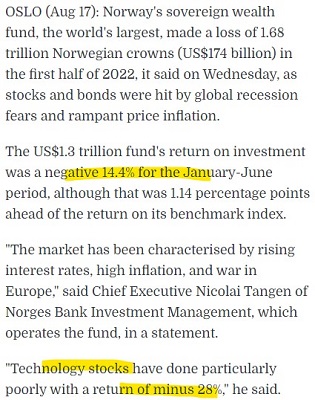
FYI, for the 1st half of 2022, even the world’s biggest pension fund got hit this much:
Boring, yet a defensive safe haven in times like this. Read the news below to understand why.
In Summary, 3 REITS are buying industrial properties, 1 is buying industrial land to build industrial properties and another industrial REIT is raising more money via private placement.
Also, while US market may be in a bad shape now, watch the below to understand why it won’t go bankrupt anytime soon.
Global equity markets plunge needs no further explanation by now, but bond markets also experienced a downturn never seen since 180 years (2 lifetimes!) ago
Conventionally, bonds are the safe haven during depressed stock market, but you’ll notice even your bonds suffered paper losses so far.
We have overlooked these events at the start of 2022:
A cornered tiger (Putin) that retaliates and launches an open war
Xi Jinping stubbornness on China’s harsh lockdown policy, otherwise, he will lose face if he U-turns (aka forcing Beijing to admit its covid-0 policy isn’t that superior after all)
Both the above adding oil to the already fiery material shortage problems, as a consequence from the pandemic
Analogy: Both earthquake and volcano eruption happening at the same time.
To put it bluntly, stocks and bond portfolio is NOT built to withstand the state of the market so far in 2022 triggered by the above.
The after-effects is Stagflation, a scenario that has not happened since 1970 when US President Nixon unpeg dollars from gold reserves standard
Explained: why we avoid M’sia equities (except REIT sectors)
Also: the occasional ups in the stock market not strong enough to pull it out from doldrums yet. At the same time, it actually pulled the bond markets down, albeit at a lesser magnitude
1 Sentence: Extremely Erratic Market, which made my investors to ask:
‘should I hedge against market volatility by investing in cryptocurrency?’ and
‘Would ETF or robo advisor fare better in this market condition?’
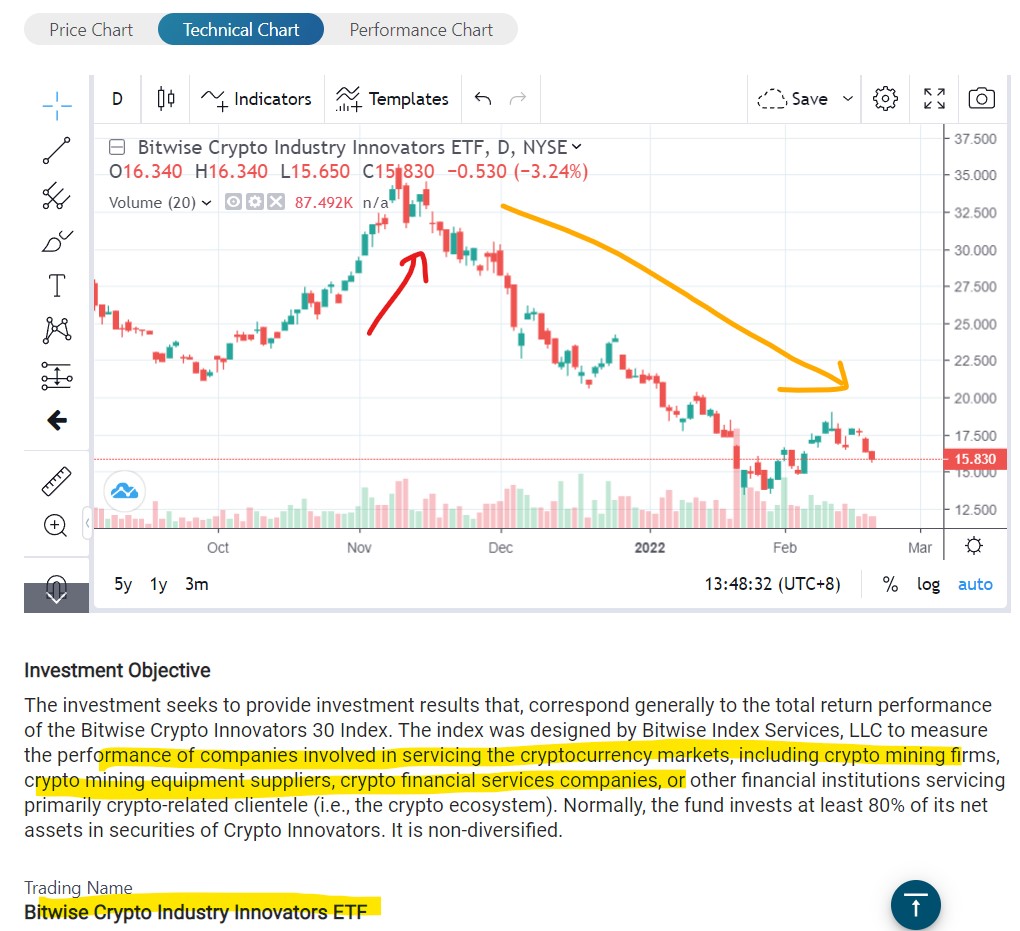
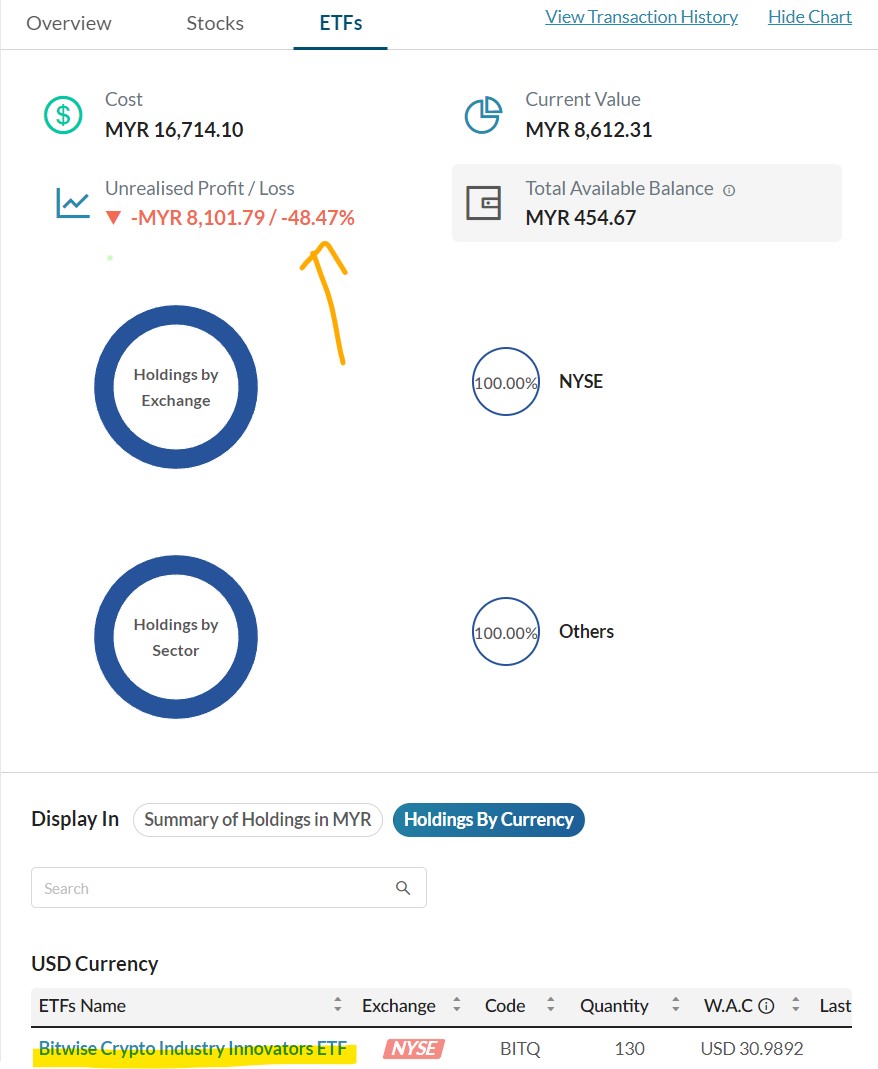
Answer: Look at the screenshot below – another adventurous client decided to experiment investing into crypto back in Nov 2021 in the form of crypto-ETF to hedge against stock market fluctuation, and no, ETF would not help – because what matters is what is INSIDE the ETF.
A very BUMPY start for 2022, in fact, the stock market posted worst weeks since pandemic start. Nonetheless, SREIT doubles their offshore investments, while imbalance recovery is expected for REITs in 2022 with Omicron still raging, REITs will be impacted as well.
Unlike fund managers or unit trust agent, I don’t do any window dressing; I’d call a spade, a spade – it has been a roller-coaster end to a turbulent year, here’s what you need to know, simplified in bite-sizes without omitting the crucial essences.
Too much money in the global financial system chasing too few good returns means we got to be selective in allocating funds into sectors getting massive attention from the big guys (aka ‘riding the wave’).
The good news is, China government policy change, first hitting tech & edu sectors, then aggravated this week by troubles at Evergrande leaves us with window of opportunities to buy in AsiaPac REITs at a discount ?
Below – what you want to know in under 2 min (pause if it is too fast for you)
Adapting your investment portfolio to changing business and economic landscape is the way to outperform.