Category: ADVANCED

  • Module 3C: How to Know a REIT is Undervalued?

    Value investing is all about buying undervalued stocks.

    You forego consumption and put away a lump sum now in expectation of more future cash flows.

    For REIT stocks, it is no different.

    The metric to look for is NAV per share (NAVPS) or NAV per unit.

    If the current stock price is less than its NAVPS, then it is considered undervalued, and vice-versa.

    This is just one of the many criterion to look for in value investing. There is, however, no guarantee that buying undervalued REIT stocks will net your high returns in short term.

    Likewise, it does not mean overvalued REIT stock should be shunned at altogether.

    But in long term, there is better chances of getting higher return if you buy in a stock when it is undervalued.

    Learn how to find this NAVPS figure in annual report.
  • Module 3D: The Valuation aka Earnings Power of REIT

    Looking at the NAV versus price is the way to see if the REIT is undervalued.

    But there is more than one way to value REIT, and if the criterion are met for most of them, this would be Buffett’s way of REIT investing.

    It’s not rocket science, I’ll show you how.

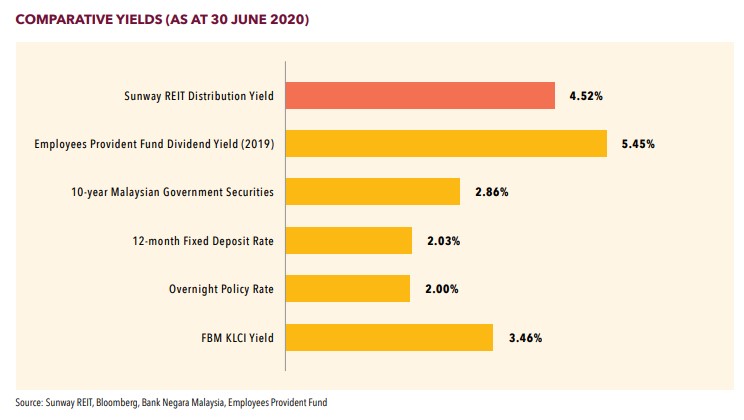
    Always compare REIT dividend yield with FD & MGS
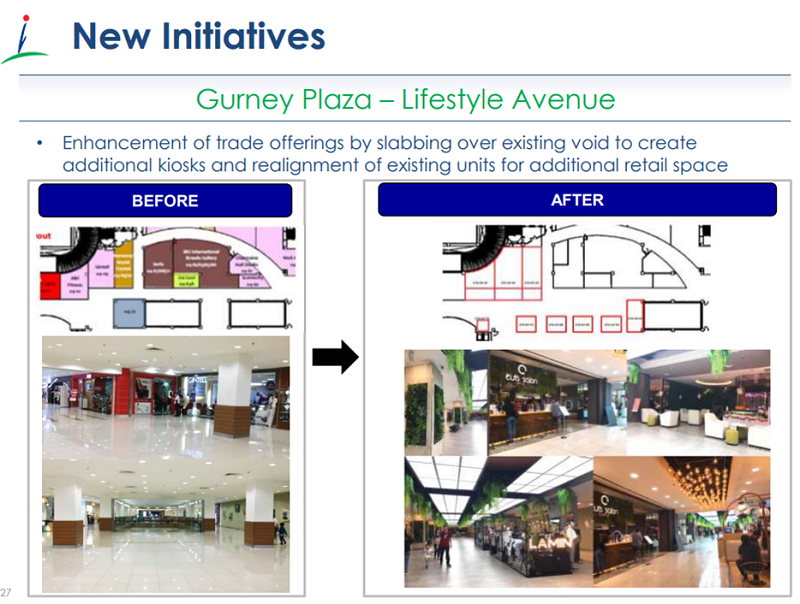
    Example of creating more space (NLA, Net Lettable Area) to generate More Rental Income
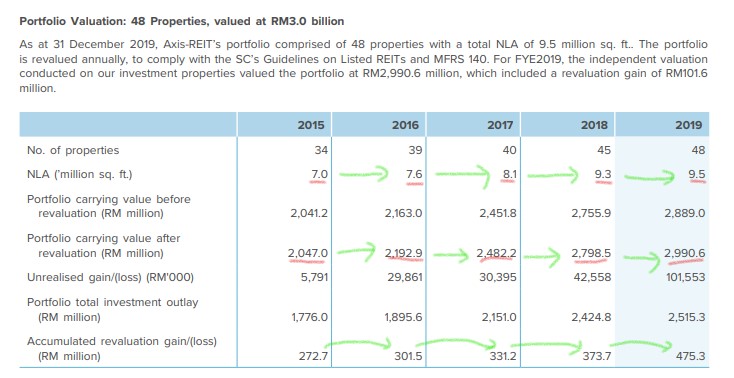
    Good Example of Increase Property Valuation by Active Acquisition
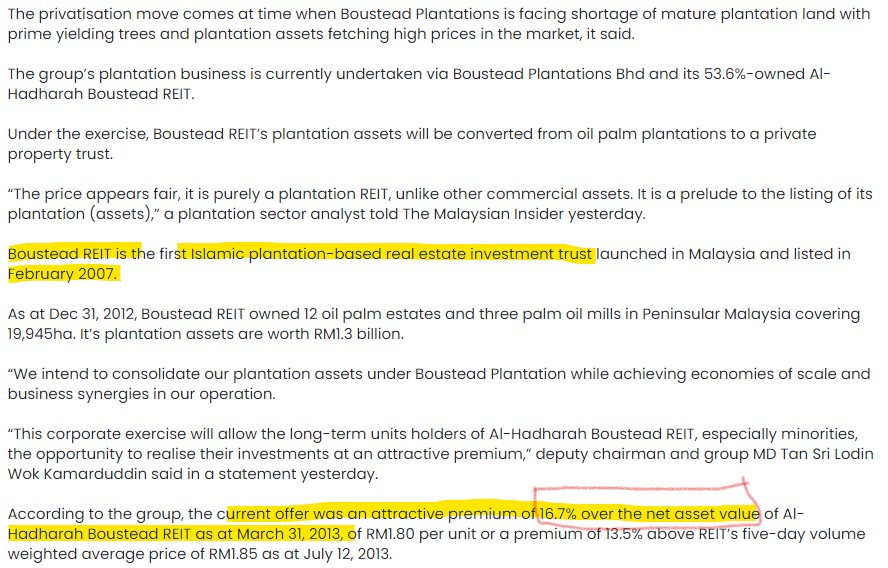
    Example of MREIT delisting – best if your average purchase price per share stays below or around the NAV/unit of the REIT
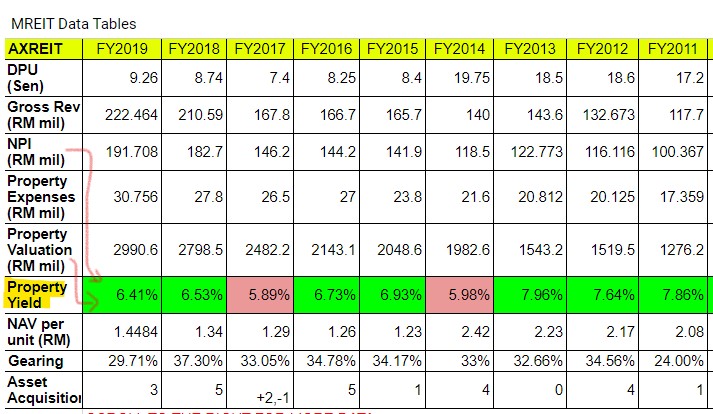
    Calculating Property Yield (not shown directly in REIT annual report)
  • Module 4 REIT Class – Retail

    The defensiveness of retail REIT is legendary. Here, we will examine why.

    However, going forward, with the emergence of e-commerce, things might not look so rosy anymore.

    That being said, online shopping will NOT kill malls.

    Better malls will make lesser malls close shop, fast.

    A similar analogy is the share market itself.

    There may be 200 listed companies and and over 100k Buy/Sell transactions everyday; however, that does not mean every counter will has equal number of transactions.

    Probably 80% of the transaction volume are concentrated on 20% of all the counters in the market. The rest of of counters may not see any buyers or sellers at all in a day, and hence their prices will be going nowhere, and soon, be forgotten.


    Being a tenant in a retail mall, especially the ones managed by a REIT manager, is serious business.

    Rental rates are normally calculated based on monthly turnover rates (profits made). The rates are either calculated based on the percentage of the tenant’s gross turnover or this formula below:

    Base rent + Service charges + Promotion charges + % (e.g. 1%) of gross sales


    In non-financial terms, the monthly rental rate for mall spaces will depend on the monthly profits made (sales), any promotions carried out, the services offered and the minimum rent agreed by both parties. The mall management can also have access to the financial records of the tenants (ie: the receipts, invoices and audit reports).

  • Module 4 REIT Class – Healthcare

    If you thought retail REIT is defensive, wait until you examine the characteristic of healthcare REIT.

    These REITs are far and between, for reasons as shown in this module, below.

  • Module 4 REIT Class – Office

    Office REIT generally is one of the least defensive due to oversupply, but for well established office REITs, this would be of little effect when the REIT manager is competent in managing their office assets.

    Here’s what you should know about office REIT.

  • Module 4 REIT Class – Industrial

    There’s a lot of room for growth for industrial REIT in Malaysia, but there’s also risk associated with industrial properties as well.

    But this can be mitigated by a competent manager.

    Here’re the things investor should know about the characteristics of industrial REIT.

  • Module 4 REIT Class – Hospitality

    It takes skill and foresight to manage a hospitality REIT.

    It has more intrinsic uncertainty compared to other class of REITs, but then again this depends on how the manager manages it.

  • Module 4 REIT Class – Niche/Specialty

    What is Niche REIT? This is a newer  lesson added by the end of 2019, given the new information and ever-evolving REIT sector.

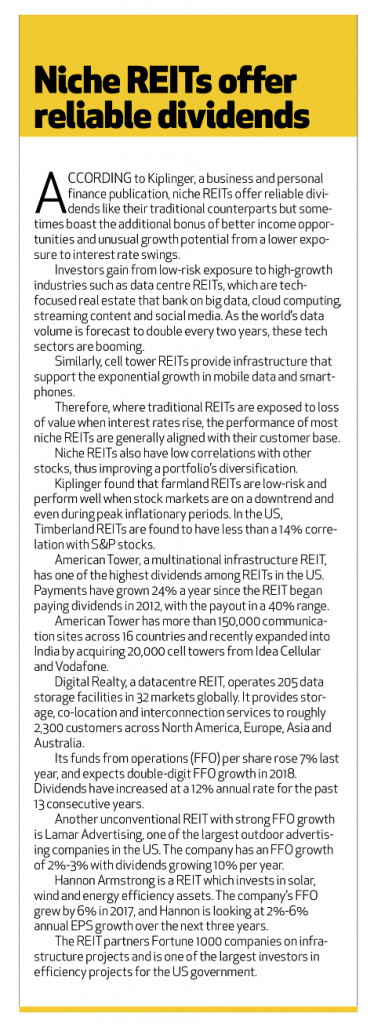
    Niche REIT will supercharge your portfolio like never before, tapping onto big trends like communication and cloud technology.

    Here’s the lowdown on niche REITs, taking Airport REIT as detailed case study.

    And some of the niche REITs mostly located outside Malaysia

  • Impact from eCommerce to Retail Malls & REITs

    This question got asked so often that it warrants a lesson on its own.

    Example like this:

    It’s 2 different thing actually – retail REITs vs retail businesses

    Because it all boils down to what really constitutes the entire tenants portfolio in a retail mall.

    Would retail malls completely go obsolete?

    No, but only the strongest will survive.

    (Even some investment analysts got it all wrong)

    Watch the below:

    And this is the only way retail malls can survive going forward

  • [special] D.C. REIT – what most people don’t know

    This is gold. Seriously.

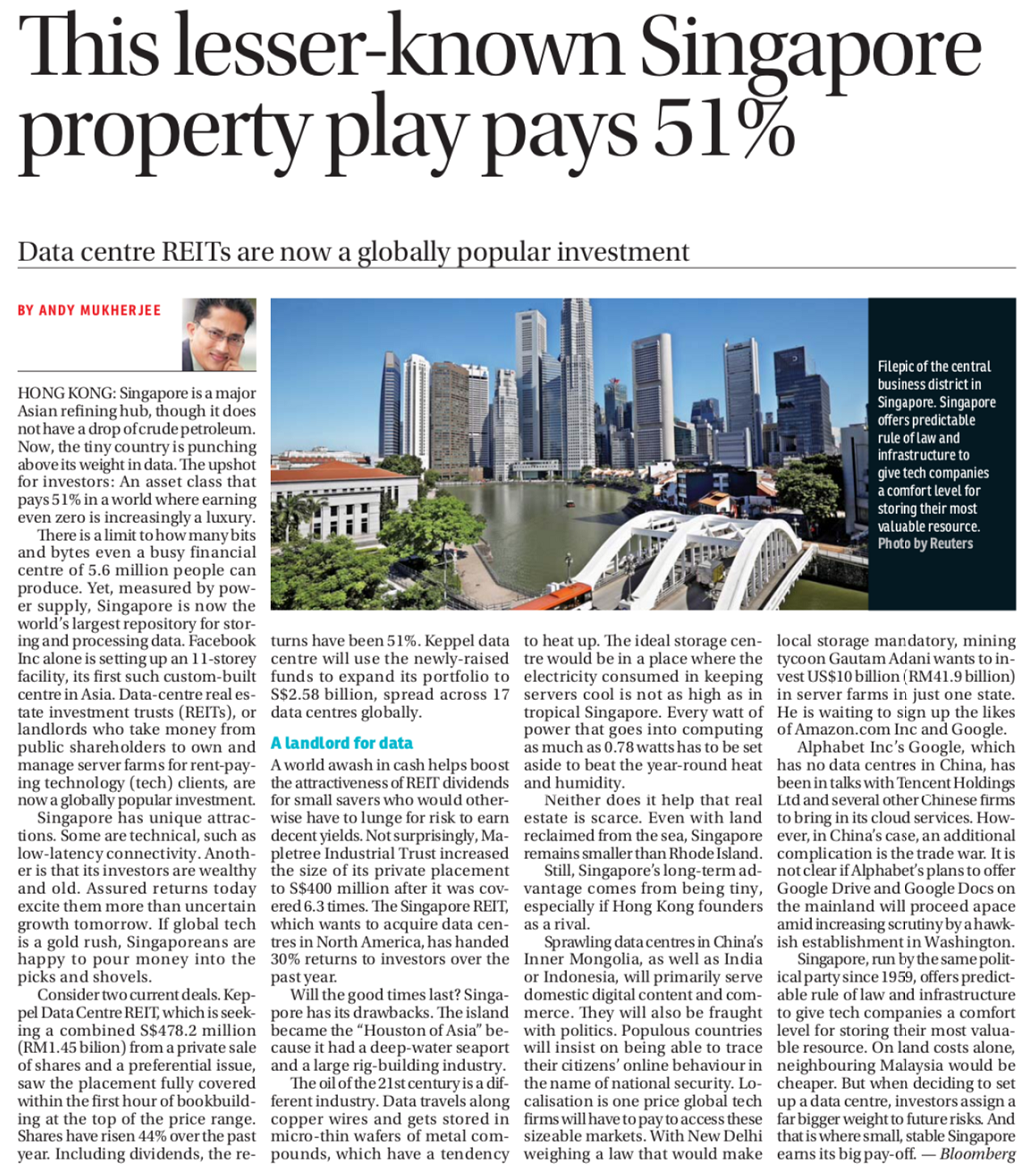
    In summary, Data Centre REITs assets consist of properties that house storage & computer systems and other associated components. Specifically, DC REITs are highly specialized buildings with integrated climate control infrastructure and various system redundancies such as backup hard disks & power supplies.

    What is so special about DC REITs is that they are NOT reliant on high volume of consumers’ traffic or human tenancy.

    On the contrary, they are usually isolated, situated away from population centres.

    In fact, most data centres are also usually literally ring-fenced with deterrent barriers from intruders, and 24 hours security measures. Access to data centre properties are also highly restricted.

    Data centre REITs can usually be characterised as having long and stable leases as tenants.

    Data centre REITs may not be as common as other types of REITs but with the increasing proliferation of big data, AI and fast internet connectivity, DC REITs are in for exponential growth in the coming years.

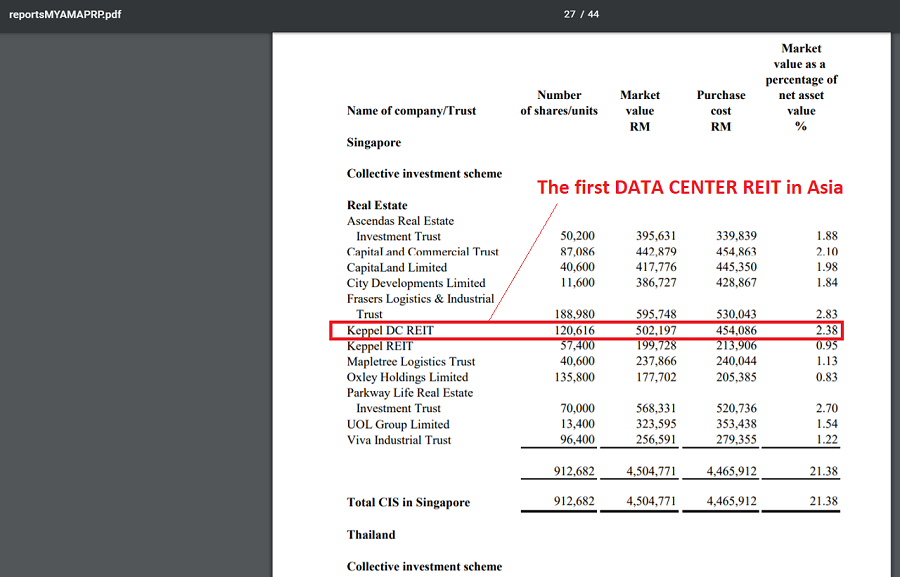
    Example of a REIT fund focused on Asia Pacific, having DC REIT in its portfolio.

    DC REITs in the spotlight

    More related information

    Google to invest up to $2 billion in Polish data centre, paper says

    Google, Deutsche Bank agree to 10-year cloud partnership

    Emerging markets to propel Asia-Pacific data centre sector in real estate

  • The Better Type of Rental Income

    Similar to rental from residential property, rental from commercial property managed by REIT falls under 2 categories – short term and long term.

    What are they and which one is preferred?

    Watch below

  • How Office REIT can evolve to tap on a sunrise trend to survive

    Nothing can defy the law of supply and demand. In the context of office MREITs, the rentals (and consequently, their stock prices) had been facing downward pressure. This will persist for long time.

    However, there is light at the end of the tunnel, provided the REIT manager is nimble and innovative enough to actually ‘walk towards the light’

    Understand more below:

  • How to Really Start Investing with RM 1k, RM 10k or RM 100k

    No matter how much you have to start investing in REITs, this lecture will actually show you what to buy as your very 1st REIT counter.

    No more procrastination.

    Also, this will answer some questions I get over the years – ‘Should I be heavy in this REIT counter but not another?’

    or

    ‘Should I allocate more to this REIT counter but not the other?’

  • The ‘LOW Dividend Yield’ Dilemma – to invest or NOT to invest now?

    If these are your thoughts that’s preventing you from buying a REIT counter, then this is perspective is going to help you.

    In this case, Action is Better than Inaction.

    (After investing though, the reverse might be true)

    A Word of Caution

    Whenever a REIT stays at a relatively high distribution yield for extended period of time, you are highly advised to not only look at the most recent year (1 year) DPU.

    You want to scrutinize the trend of its DPU (uptrend or downtrend) for the past 5 years before deciding to invest.

    You will be stuck between a rock and a hard place if you bought high stakes into a REIT at a relatively high distribution yield but that yield % keeps on going down in the upcoming years due to down-trending DPU.

  • Flywheel Investing Principle using REITs

    Any investment vehicle or investing approach –  without this flywheel element, wont get far.

    It will burn you out and suck you into an abyss, leading you to nowhere.

    The feeling of – Neither here nor there.

    With it, you rise to the top – given time.

    Watch as I explain below:

  • How to Maximize the Compounding Effect from REIT Dividends

    If the title of this module does not sound deliciously self-explanatory enough to you, I don’t know what will.

    So make sure you don’t miss a second of this module.